
The AI-Powered MVP: How We Built a Website with a Single Prompt
A step-by-step guide to collaborative branding, AI-driven specifications, and "Vibe Coding"

Where our last session focused on using AI to validate ideas, this week we put that theory into practice. Validation is critical, but the real test is turning a validated concept into a tangible product. Traditionally, this is where momentum slows, as branding, design, and development create significant barriers. With modern AI tools, this entire process can be compressed from months into a single session.
This article breaks down the framework we used to go from a raw idea—a local dog grooming service—to a live, multi-page website prototype in under 90 minutes. It’s a repeatable system that combines collaborative human planning with AI-driven execution, demonstrating that the role of the builder is shifting from coder to creative director.
Step 1: The Collaborative Blueprint (The Google Doc)
Just as before, we started with human thinking. Before any AI was prompted, we used a collaborative Google Doc to define the business fundamentals. This grounds the project in shared understanding and ensures the AI’s outputs are aligned with our strategic goals.
We defined our MVP by answering four key questions:
Who is our target audience? (Seniors, owners with disabilities, busy professionals)
What problems are we solving? (Anxious dogs, limited appointment slots, transportation issues)
What is our unique value proposition? (One-dog-at-a-time care, online booking, local focus)
What are the core vs. non-MVP features? (A simple booking site is MVP; a delivery service is not)
This initial planning phase is non-negotiable. It creates the raw material that fuels every subsequent AI-driven step.
Step 2: Live Branding with AI in Minutes
With our strategy defined, we turned to ChatGPT for creative execution. Using prompts that referenced our planning document, we generated and voted on the entire brand identity in real-time.
The AI was tasked with creating:
5 Business Names: Reflecting our unique value propositions.
5 Slogans: Reinforcing our solutions to customer pain points.
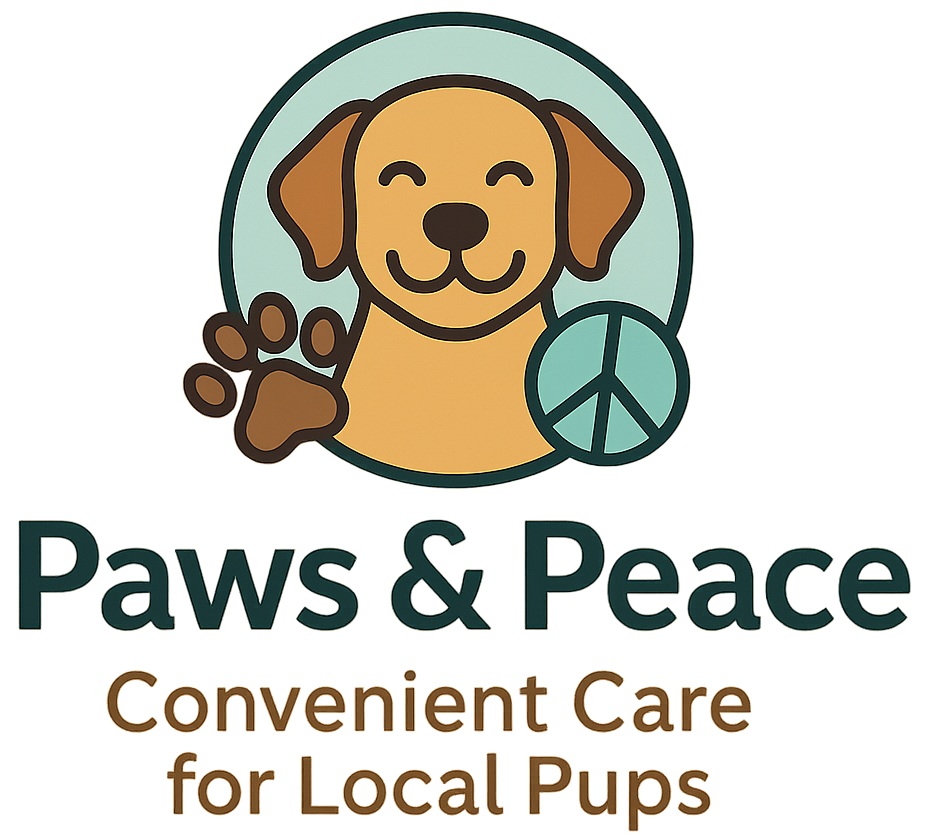
1 Logo: A visual representation of the brand’s friendly, professional tone.
1 Colour Palette: Complementing the logo and evoking a sense of calm and trust.
Within minutes, we had our final brand, decided by group consensus:
Name: Paws & Peace
Slogan: Convenient Care for Local Pups
Logo: A clean, badge-style design featuring a calm dog.
Colors: A palette of Serene Teal, Soft Gold, and Bark Brown.
This process demonstrates how AI can act as a creative partner, rapidly generating high-quality options that would typically take days of deliberation.
Step 3: The PRD—Your AI's Single Source of Truth
This was the pivotal moment of the session. We combined all our work—the strategic plan from the Google Doc and the creative assets from the branding session—into a single prompt for ChatGPT to generate a Product Requirements Document (PRD).
A PRD is a detailed blueprint that tells a developer (or in our case, an AI) exactly what to build, without specifying how. It translates business goals into technical specifications.
Our prompt instructed the AI to generate a PRD with these sections:
Project Overview (Business name, slogan, mission)
Website Goals & Success Metrics (e.g., ≥ 100 email sign-ups in 60 days)
Core Features (MVP) (Required pages like Home, Services, Booking)
Design Requirements (Hex codes, typography, imagery style)
Technical Specifications (Forms and their fields, accessibility standards)
Content Strategy (Exact headlines, button text, and service descriptions)
The AI synthesized our scattered notes into a professional, organized blueprint. This document became the single source of truth for the final build.
Step 4: Welcome to "Vibe Coding"
With our PRD complete, we moved to the build phase using the approach called "Vibe Coding"—building software by chatting with an AI instead of writing code. You describe what you want, and the AI makes it happen in real-time.
Our toolkit for this was:
Lovable.dev: A chat-based AI website builder that handles the frontend (what users see).
Supabase.com: A backend service that manages databases, forms, and data storage.
This combination allows anyone to act as a creative director. You provide the vision; the AI handles the technical implementation.
The Live Build: A Single Prompt to a Full Website
The final step was the simplest. We copied our entire PRD, attached our logo, and pasted it into Lovable.dev with a custom prompt.
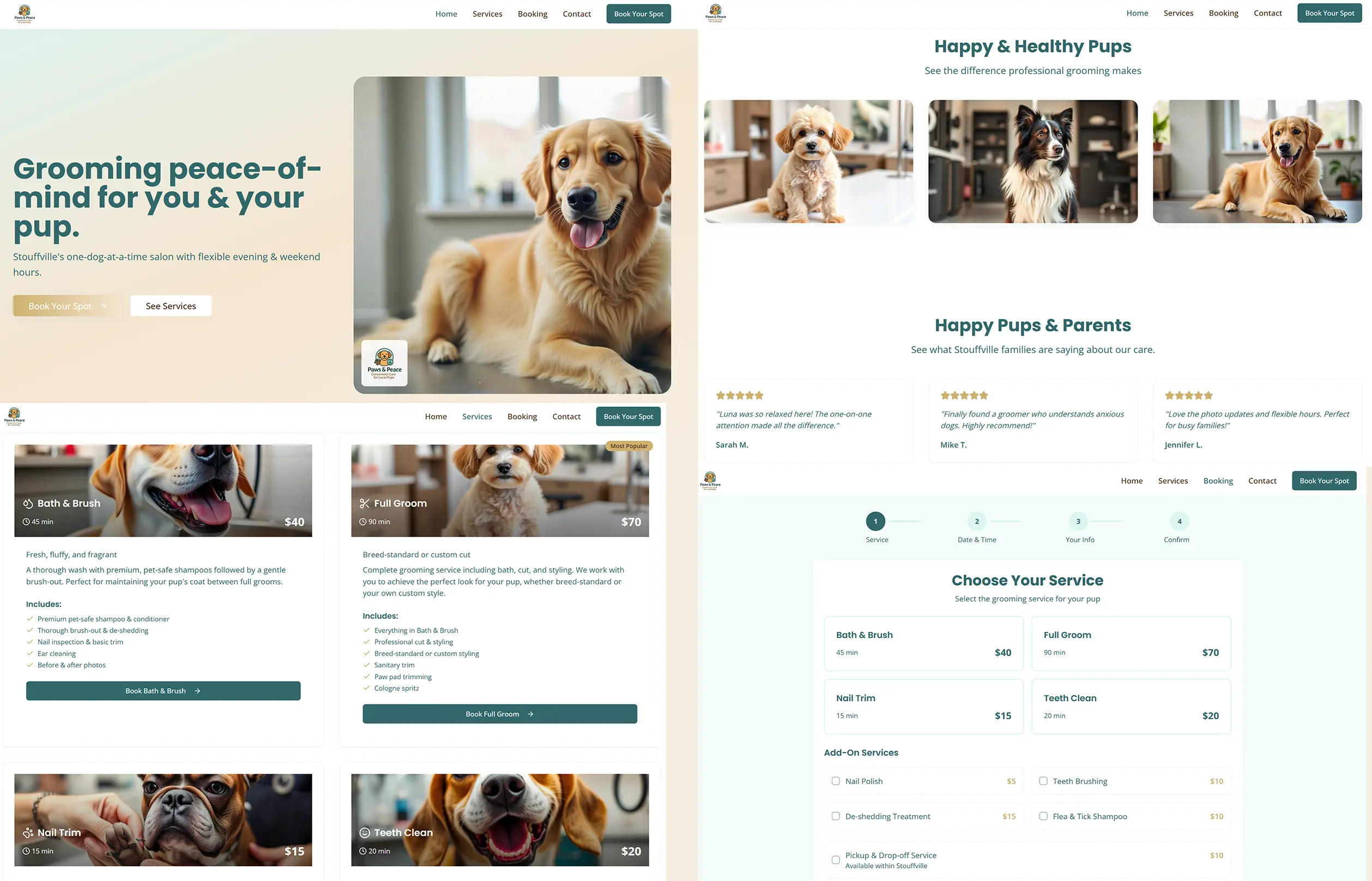
The AI parsed the document and, within minutes, generated a complete, multi-page website that included:
A fully designed homepage with our logo, colors, and content.
A services page with pricing and descriptions.
A functional multi-step booking form.
A separate "Coming Soon" page designed to capture pre-launch email sign-ups.
The result was a professional, responsive, and live website that perfectly matched the specifications we had collaboratively designed.
The Four-Step MVP Framework
This session revealed a clear, repeatable framework for building AI-powered MVPs:
Plan: Start with human-led collaborative planning to define your strategy.
Brand: Use AI as a creative partner to rapidly generate and decide on brand assets.
Document: Synthesize all planning and branding into a comprehensive PRD. This is your master prompt.
Build: Hand the PRD to an AI coding tool and iterate using natural language.
Practical Recommendations
Never Skip the Blueprint: A detailed PRD is the most critical input. The quality of the AI’s output is directly tied to the quality of this document.
Use AI for Both Logic and Creativity: Let AI help with strategic analysis (Session 1) and creative brainstorming (this Session).
Embrace "Vibe Coding": Experiment with tools like Lovable.dev to see how quickly you can bring ideas to life without writing code.
Focus on the "What," Not the "How": When writing your PRD, define your business needs and user experience goals. Let the AI choose the best technical path to get there.
Final Thoughts
The barrier to creating high-quality digital products is no longer technical skill, but the clarity of your vision. The process of building is becoming a conversation. By structuring our ideas into a clear blueprint, we can empower AI to handle the complex execution, freeing us to focus on strategy and creativity.
This isn't about replacing developers; it's about enabling creators. The ability to go from a conversation in a room to a live website in the same afternoon fundamentally changes the speed at which ideas can be tested and brought to market.
About This Session
The framework and examples in this article were part of a live session held on Sunday, August 3, via Zoom, as part of the AI Circle Summer Series. This session was the second in Track 2: From Idea to MVP, a hands-on program designed for entrepreneurs and builders who want to explore using AI to validate, prototype, and refine early-stage ideas.
If you're interested in learning more or joining future sessions, details on both Track 1 (AI Skills) and Track 2 (Startup Building) are available in this overview:
👉 Two Tracks, One Goal: Learn & Build With AI This Summer
Participation is free, local to Stouffville, and beginner-friendly.
Join AI Circle at AICircle.ca. Our code is open source on GitHub, our Slack is open to all, and our next meeting is at the Stouffville Library. Come build with us.